Download PDF

1. Company Snapshot

1.a. Company Description

The Procter & Gamble Company provides branded consumer packaged goods worldwide.It operates through five segments: Beauty; Grooming; Health Care; Fabric & Home Care; and Baby, Feminine & Family Care.The Beauty segment offers conditioners, shampoos, styling aids, and treatments under the Head & Shoulders, Herbal Essences, Pantene, and Rejoice brands; and antiperspirants and deodorants, personal cleansing, and skin care products under the Olay, Old Spice, Safeguard, Secret, and SK-II brands.


The Grooming segment provides shave care products and appliances under the Braun, Gillette, and Venus brand names.The Health Care segment offers toothbrushes, toothpastes, and other oral care products under the Crest and Oral-B brand names; and gastrointestinal, rapid diagnostics, respiratory, vitamins/minerals/supplements, pain relief, and other personal health care products under the Metamucil, Neurobion, Pepto-Bismol, and Vicks brands.The Fabric & Home Care segment provides fabric enhancers, laundry additives, and laundry detergents under the Ariel, Downy, Gain, and Tide brands; and air care, dish care, P&G professional, and surface care products under the Cascade, Dawn, Fairy, Febreze, Mr. Clean, and Swiffer brands.


The Baby, Feminine & Family Care segment offers baby wipes, taped diapers, and pants under the Luvs and Pampers brands; adult incontinence and feminine care products under the Always, Always Discreet, and Tampax brands; and paper towels, tissues, and toilet papers under the Bounty, Charmin, and Puffs brands.The company sells its products primarily through mass merchandisers, e-commerce, grocery stores, membership club stores, drug stores, department stores, distributors, wholesalers, specialty beauty stores, high-frequency stores, pharmacies, electronics stores, and professional channels, as well as directly to consumers.The Procter & Gamble Company was founded in 1837 and is headquartered in Cincinnati, Ohio.

Show Full description

1.b. Last Insights on PG

Procter & Gamble faces short-term headwinds, including soft demand, inflation, and fierce competition, which have pressured growth and margins. Institutional investors, such as Beacon Pointe Advisors and Avantax Advisory Services, have decreased their stakes in the company. Additionally, 17 Capital Partners trimmed its stake by 9.8%. However, Baltimore Washington Financial Advisors increased its position by 12.7%. The company's recent growth moderation and minor market share losses are viewed as normal cyclical behavior. P&G's valuation is considered fair, with a 2.8% dividend yield above its 5- and 10-year averages.

1.c. Company Highlights

2. P&G's Q1 FY26: Steady Execution Amidst Challenging Environment

Procter & Gamble's first-quarter fiscal '26 results demonstrated strong execution of its integrated strategy, with organic sales growing 2% amidst a difficult geopolitical, competitive, and consumer environment. The company's core earnings per share (EPS) came in at $1.99, beating estimates of $1.9, representing a 3% increase from the prior year. Core gross margin was down 50 basis points, while core operating margin remained flat. Adjusted free cash flow productivity was an impressive 102%, with the company returning $3.8 billion to shareholders through dividends and share repurchases.

Publication Date: Oct -25

📋 Highlights
  • 40 Consecutive Quarters of Organic Sales Growth: Organic sales grew 2%, maintaining momentum in a challenging environment.
  • Strong Regional Performance: Greater China rose 5% (Pampers/SK-II double-digit growth), Latin America up 7% (Mexico/Brazil), and Europe focus markets +1%.
  • Core EPS Growth: Core earnings per share reached $1.99, a 3% increase from the prior year.
  • Shareholder Returns: Returned $3.8B to shareholders ($2.55B dividends, $1.25B buybacks), aligning with $15B annual return target.
  • Margin Productivity: Adjusted free cash flow productivity hit 102%, exceeding the fiscal 2026 guidance range of 85–90%.

Segment Performance

The company's key categories and regions performed well, with Skin & Personal Care leading the growth, up high single digits. Hair Care, Grooming, Personal Health Care, Home Care, and Baby Care also grew, albeit at a lower rate. However, Oral Care and Feminine Care were flat, while Fabric Care and Family Care declined. Geographically, North America grew 1%, Europe's focus markets grew more than 1%, and Greater China saw a 5% growth, driven by double-digit growth in Pampers and SK-II.

Strategic Focus

P&G is driving superiority across its portfolio, with a focus on innovation, including the launch of Tide evo, a new laundry detergent developed on its breakthrough Functional fibers platform. The company is also accelerating productivity in all areas of its operation, including restructuring work to fuel investments in superiority and drive margin expansion. As Andre Schulten noted, "Supply Chain 3.0 will revolutionize the supply chain via automation and digitalization, enabling investments in innovation programs over the next 12-18 months."

Valuation and Outlook

With a P/E Ratio of 22.16 and an ROE of 32.09%, the market is pricing in a certain level of growth and profitability for P&G. Analysts estimate revenue growth at 3.4% for the next year. Given the company's guidance for fiscal '26, with organic sales growth expected to be in line to plus 4% and core EPS growth expected to be in line to plus 4%, it appears that the company is on track to meet its growth objectives. The dividend yield of 2.74% also provides a relatively stable return for investors.

3. NewsRoom

Card image cap

The Dividend Stocks That Keep Paying Even When Markets Stumble

Dec -04

Card image cap

Battle of the Consumer Staples ETFs: Who Comes Out on Top, XLP or VDC?

Dec -04

Card image cap

4 Consumer Product Stocks to Watch as the Market Resets for 2026

Dec -04

Card image cap

P&G Braces For Weak U.S. Quarter

Dec -03

Card image cap

The Dividend Income Strategy That Helps You Sleep Better at Night

Dec -03

Card image cap

Brandes Investment Partners LP Has $12.57 Million Holdings in Unifirst Corporation $UNF

Dec -03

Card image cap

Why Procter & Gamble Stock Hit a 2-Year Low on Tuesday

Dec -02

Card image cap

Procter & Gamble's $1.5B Cost Savings Plan: Efficacy or Overreach?

Dec -02

4. Business Breakdown

4.a. Revenues by Country

4.b. Revenues by Segment

5. Expected revenues mid-term growth (4.42%)

6. Segments

Fabric & Home Care

Expected Growth: 4.3%

Procter & Gamble's fabric and home care products is driven by increasing consumer demand for premium and sustainable products, coupled with the company's strong brand portfolio and continued innovation in laundry detergents and fabric care.

Baby, Feminine & Family Care

Expected Growth: 4.8%

Growing demand for premium baby care products, increasing popularity of feminine hygiene products, and innovative family care solutions drive growth for Procter & Gamble's products.

Beauty

Expected Growth: 4.2%

The Procter & Gamble Company’s beauty segment is driven by increasing demand for premium skincare and haircare products, particularly in the Asia Pacific region, and the company’s efforts to expand its e-commerce presence.

Health Care

Expected Growth: 4.5%

P&G’s Health Care segment is expected to grow driven by increasing demand for oral care products, expansion in emerging markets, and innovation in personal health care products, particularly in the feminine care and gastrointestinal segments.

Grooming

Expected Growth: 4.2%

The Procter & Gamble Company's Grooming segment growth is driven by the adoption of premium grooming products, innovative product launches, and increasing demand for personal care products, particularly among younger generations.

Corporate

Expected Growth: 4.2%

The Procter & Gamble’s focus on product innovation, and digital marketing will drive sales growth. Additionally, the company’s efforts to expand in emerging markets and strengthen its e-commerce presence will contribute to the segment’s growth.

7. Detailed Products

Tide Laundry Detergent

A popular laundry detergent designed to remove tough stains and leave clothes smelling fresh

Pampers Diapers

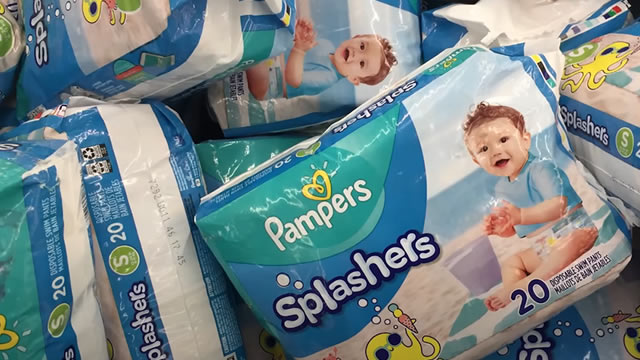
Disposable diapers designed for comfort and protection for babies

Gillette Razors

High-quality razors designed for a close and comfortable shave

Oral-B Toothbrushes

Electric and manual toothbrushes designed for oral care and hygiene

Head & Shoulders Shampoo

A popular shampoo designed to remove dandruff and other scalp irritations

Febreze Air Effects

Air fresheners designed to eliminate odors and leave a fresh scent

Downy Fabric Softener

A popular fabric softener designed to reduce static cling and make clothes feel softer

Crest Toothpaste

A popular toothpaste designed to protect teeth and gums from decay and disease

Always Sanitary Products

Sanitary pads and tampons designed for feminine hygiene

Vicks Cough Drops

Cough drops designed to soothe sore throats and relieve coughs

8. The Procter & Gamble Company's Porter Forces

Forces Ranking

Threat Of Substitutes

The threat of substitutes for P&G is medium due to the presence of alternative products in the market, but the company's strong brand portfolio and product differentiation mitigate this threat.

Bargaining Power Of Customers

The bargaining power of customers is low for P&G due to the company's strong brand recognition and customer loyalty, making it difficult for customers to negotiate prices or switch to alternative products.

Bargaining Power Of Suppliers

The bargaining power of suppliers is medium for P&G due to the company's dependence on a few large suppliers, but the company's scale and negotiating power mitigate this threat.

Threat Of New Entrants

The threat of new entrants is low for P&G due to the high barriers to entry in the consumer goods industry, including significant capital requirements and the need for established distribution networks.

Intensity Of Rivalry

The intensity of rivalry is high for P&G due to the presence of several large competitors in the consumer goods industry, leading to intense competition for market share and pricing pressure.

9. SWOT Analysis

10. Capital Structure

10.a. Balance Sheet

10.b. Weighted Average Cost of capital

Value
Debt Weight 42.37%
Debt Cost 3.95%
Equity Weight 57.63%
Equity Cost 6.05%
WACC 5.16%
Leverage 73.53%

11. Quality Control: The Procter & Gamble Company passed 5 out of 9 key points

12.a Historical Valuation

12.b Price/Earnings Ratio

12.c Margin Valuation

12.d Peers Valuation

Peers Group Analysis

Stock-Card
Kimberly-Clark

A-Score: 5.6/10

Value: 3.2

Growth: 4.4

Quality: 6.0

Yield: 8.0

Momentum: 2.0

Volatility: 10.0

1-Year Total Return ->

Stock-Card
Procter & Gamble

A-Score: 5.3/10

Value: 2.8

Growth: 4.4

Quality: 7.4

Yield: 5.0

Momentum: 2.0

Volatility: 10.0

1-Year Total Return ->

Stock-Card
Colgate-Palmolive

A-Score: 5.1/10

Value: 3.1

Growth: 4.9

Quality: 6.7

Yield: 5.0

Momentum: 1.0

Volatility: 10.0

1-Year Total Return ->

Stock-Card
Church & Dwight Co

A-Score: 4.7/10

Value: 2.4

Growth: 5.0

Quality: 6.9

Yield: 2.0

Momentum: 2.0

Volatility: 9.7

1-Year Total Return ->

Stock-Card
Kenvue

A-Score: 4.6/10

Value: 4.3

Growth: 3.4

Quality: 6.2

Yield: 8.0

Momentum: 1.5

Volatility: 4.0

1-Year Total Return ->

Stock-Card
Estee Lauder

A-Score: 2.9/10

Value: 3.3

Growth: 1.7

Quality: 2.7

Yield: 2.0

Momentum: 4.0

Volatility: 4.0

1-Year Total Return ->

Peers Metrics

12.e Scoring Insights

12.f DCF BETA

Parameters

Short Term Growth

Short term Time

Long-Term Growth

WACC

Target Price

145.36$

Current Price

145.36$

Potential

-0.00%

Expected Cash-Flows