Download PDF

1. Company Snapshot

1.a. Company Description

NVIDIA Corporation provides graphics, and compute and networking solutions in the United States, Taiwan, China, and internationally.The company's Graphics segment offers GeForce GPUs for gaming and PCs, the GeForce NOW game streaming service and related infrastructure, and solutions for gaming platforms; Quadro/NVIDIA RTX GPUs for enterprise workstation graphics; vGPU software for cloud-based visual and virtual computing; automotive platforms for infotainment systems; and Omniverse software for building 3D designs and virtual worlds.Its Compute & Networking segment provides Data Center platforms and systems for AI, HPC, and accelerated computing; Mellanox networking and interconnect solutions; automotive AI Cockpit, autonomous driving development agreements, and autonomous vehicle solutions; cryptocurrency mining processors; Jetson for robotics and other embedded platforms; and NVIDIA AI Enterprise and other software.


The company's products are used in gaming, professional visualization, datacenter, and automotive markets.NVIDIA Corporation sells its products to original equipment manufacturers, original device manufacturers, system builders, add-in board manufacturers, retailers/distributors, independent software vendors, Internet and cloud service providers, automotive manufacturers and tier-1 automotive suppliers, mapping companies, start-ups, and other ecosystem participants.It has a strategic collaboration with Kroger Co. NVIDIA Corporation was incorporated in 1993 and is headquartered in Santa Clara, California.

Show Full description

1.b. Last Insights on NVDA

NVIDIA's recent performance has been impacted by several negative factors. Despite delivering a blowout Q4 and decent Q1 guidance, the company's stock fell after earnings, with analysts describing the trading action as "odd" given the stellar results. Concerns over Big Tech CapEx narrative and energy headwinds have contributed to the downturn. Additionally, some analysts have noted that the company's underperformance compared to other AI peers may lead to a pullback. A "rotation out of tech" sentiment has also been cited.

1.c. Company Highlights

2. NVIDIA's Q4 FY2026 Earnings: A Strong Beat Across the Board

NVIDIA reported record revenue of $68 billion, a 73% year-over-year increase, driven primarily by sustained strength in Blackwell and the Blackwell Ultra ramp in its data center segment, which saw revenue surge 75% year-over-year to $62 billion. The company's EPS came in at $1.62, beating estimates of $1.54. GAAP and non-GAAP gross margins were 74.9% and 75%, respectively. NVIDIA generated free cash flow of $35 billion in Q4 and $97 billion in fiscal year 2026, returning $41 billion to shareholders through share repurchases and dividends.

Publication Date: Feb -27

📋 Highlights
  • Record Revenue: Total revenue reached $68 billion, up 73% YoY, driven by data center growth ($62 billion, +75% YoY).
  • Free Cash Flow Surge: Generated $35 billion in Q4 and $97 billion annually, returning 43% ($41 billion) to shareholders.
  • Rubin Platform Efficiency: Expected to reduce inference token costs by 10x and train MOE models with 25% fewer GPUs compared to Blackwell.
  • Growth Projections: $3–4 trillion in data center CapEx by 2030 and $78 billion Q1 revenue (±2%), led by data center demand.
  • Networking Expansion: Spectrum-X Ethernet achieved $11–12 billion annualized run rate, with 3.6x YoY growth in Q4.

Data Center Dominance

The data center segment's strong performance was fueled by the Blackwell platform and the company's ability to extreme co-design across compute and networking. NVIDIA's networking business is also growing rapidly, with 3.6x year-over-year growth in Q4. The Spectrum-X Ethernet switching platform has seen significant growth, with an annualized run rate of $11-12 billion in the second half of last year. Jen-Hsun Huang stated that the company will continue to support both InfiniBand and Ethernet, with a focus on open ecosystems.

Gaming and Professional Visualization Growth

Gaming revenue increased 47% year-over-year to $3.7 billion, driven by strong Blackwell demand and improved supply. Professional Visualization revenue crossed the $1 billion mark for the first time, reaching $1.3 billion, up 159% year-over-year and 74% sequentially. NVIDIA's GeForce RTX remains the leading platform for PC gamers, creators, and developers.

Future Roadmap and Outlook

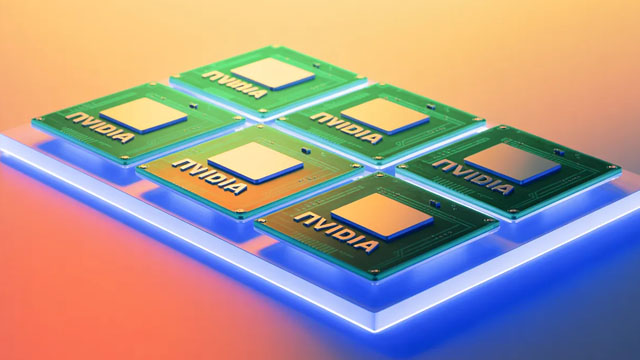
NVIDIA expects sequential revenue growth throughout calendar 2026, exceeding previous expectations. The company unveiled the Rubin platform, comprised of 6 new chips, which will train MOE models with 1/4 the number of GPUs and reduce inference token costs by up to 10x compared to Blackwell. Colette Kress mentioned that NVIDIA expects strong demand for Vera Rubin, with every customer likely to purchase it.

Valuation and Growth Expectations

Analysts estimate next year's revenue growth at 62.8%. NVIDIA's current valuation metrics, including a P/E Ratio of 37.43, P/S Ratio of 20.85, and EV/EBITDA of 31.15, suggest that the market has high expectations for the company's continued growth. With a strong track record of innovation and a dominant position in the AI and data center markets, NVIDIA is well-positioned to drive future growth.

Capital Deployment and Shareholder Returns

NVIDIA returned $41 billion to shareholders in fiscal year 2026 through share repurchases and dividends, representing 43% of its free cash flow. The company continues to prioritize supporting its ecosystem and investing in strategic opportunities while maintaining a strong capital return program.

3. NewsRoom

Card image cap

Nvidia set to spotlight next wave of AI infrastructure at GTC

18:31

Card image cap

Nvidia's About to Go All-In on AI Agents

18:18

Card image cap

Nvidia, Apple 'Too Big, Too Soon'? Relax — This Same Thing Happened In The 1930s

18:18

Card image cap

Nvidia Invests in Mira Murati's Thinking Machines Lab

18:08

Card image cap

Top 5 Unstoppable AI Stocks to Buy for 2026

18:05

Card image cap

Nvidia investors banking on a big GTC stock bump may be disappointed

16:33

Card image cap

Nvidia makes 'significant investment' in Mira Murati's Thinking Machines Lab

15:36

Card image cap

Nvidia stock is rising today and the reasons are bigger than you think

15:23

4. Business Breakdown

4.a. Revenues by Country

4.b. Revenues by Segment

5. Expected revenues mid-term growth (39.86%)

6. Segments

Compute & Networking

Expected Growth: 43.5%

Growing demand for AI computing, high-performance computing, and networking in datacenters drives NVIDIA's Compute & Networking segment.

Graphics

Expected Growth: 10.3%

Growing demand for gaming and mainstream markets, driven by increasing adoption, and rising popularity of e-sports and cloud gaming

7. Detailed Products

GeForce Graphics Cards

High-performance graphics processing units (GPUs) for gaming, professional visualization, and AI computing

Quadro Graphics Cards

Professional-grade GPUs for workstations, designed for engineering, architecture, and video production

Tesla V100 and T4 GPUs

Datacenter-grade GPUs for AI, high-performance computing, and cloud computing

NVIDIA DGX-1 and DGX-2

AI supercomputers for datacenter and cloud deployments

NVIDIA Shield

Gaming console and streaming device for 4K entertainment

NVIDIA Drive

AI computing platform for autonomous vehicles

NVIDIA Jetson

AI computing platform for edge devices and robots

NVIDIA Clara

AI computing platform for healthcare and medical imaging

8. NVIDIA Corporation's Porter Forces

Forces Ranking

Threat Of Substitutes

NVIDIA's products are highly specialized and customized, making it difficult for substitutes to emerge.

Bargaining Power Of Customers

While NVIDIA has a large customer base, its products are often highly customized, giving customers some bargaining power.

Bargaining Power Of Suppliers

NVIDIA has a diverse supplier base, and its suppliers have limited bargaining power due to the company's large scale and negotiating power.

Threat Of New Entrants

The graphics processing unit (GPU) market has high barriers to entry, including significant R&D investments and manufacturing capabilities, making it difficult for new entrants to emerge.

Intensity Of Rivalry

The GPU market is highly competitive, with NVIDIA facing intense competition from AMD and other players, leading to a high level of rivalry.

9. SWOT Analysis

10. Capital Structure

10.a. Balance Sheet

10.b. Weighted Average Cost of capital

Value
Debt Weight 18.78%
Debt Cost 3.95%
Equity Weight 81.22%
Equity Cost 12.66%
WACC 11.02%
Leverage 23.12%

11. Quality Control: NVIDIA Corporation passed 9 out of 9 key points

12.a Historical Valuation

12.b Price/Earnings Ratio

12.c Margin Valuation

12.d Peers Valuation

Peers Group Analysis

Stock-Card
NVIDIA

A-Score: 5.4/10

Value: 0.3

Growth: 10.0

Quality: 9.2

Yield: 0.0

Momentum: 8.5

Volatility: 4.3

1-Year Total Return ->

Stock-Card
Analog Devices

A-Score: 5.3/10

Value: 1.0

Growth: 5.3

Quality: 7.4

Yield: 4.0

Momentum: 7.0

Volatility: 7.0

1-Year Total Return ->

Stock-Card
AMD

A-Score: 4.4/10

Value: 0.2

Growth: 6.8

Quality: 6.9

Yield: 0.0

Momentum: 9.5

Volatility: 3.0

1-Year Total Return ->

Stock-Card
GLOBALFOUNDRIES

A-Score: 3.8/10

Value: 6.0

Growth: 5.0

Quality: 4.2

Yield: 0.0

Momentum: 3.0

Volatility: 4.7

1-Year Total Return ->

Stock-Card
Intel

A-Score: 3.6/10

Value: 4.5

Growth: 1.2

Quality: 3.5

Yield: 1.0

Momentum: 9.0

Volatility: 2.7

1-Year Total Return ->

Stock-Card
ON Semiconductor

A-Score: 3.4/10

Value: 2.7

Growth: 6.9

Quality: 5.3

Yield: 0.0

Momentum: 2.0

Volatility: 3.3

1-Year Total Return ->

Peers Metrics

12.e Scoring Insights

12.f DCF BETA

Parameters

Short Term Growth

Short term Time

Long-Term Growth

WACC

Target Price

184.77$

Current Price

184.77$

Potential

-0.00%

Expected Cash-Flows