Download PDF

1. Company Snapshot

1.a. Company Description

Under Armour, Inc., together with its subsidiaries, engages in the developing, marketing, and distributing performance apparel, footwear, and accessories for men, women, and youth.The company offers its apparel in compression, fitted, and loose fit types.It also provides footwear products for running, training, basketball, cleated sports, recovery, and outdoor applications.


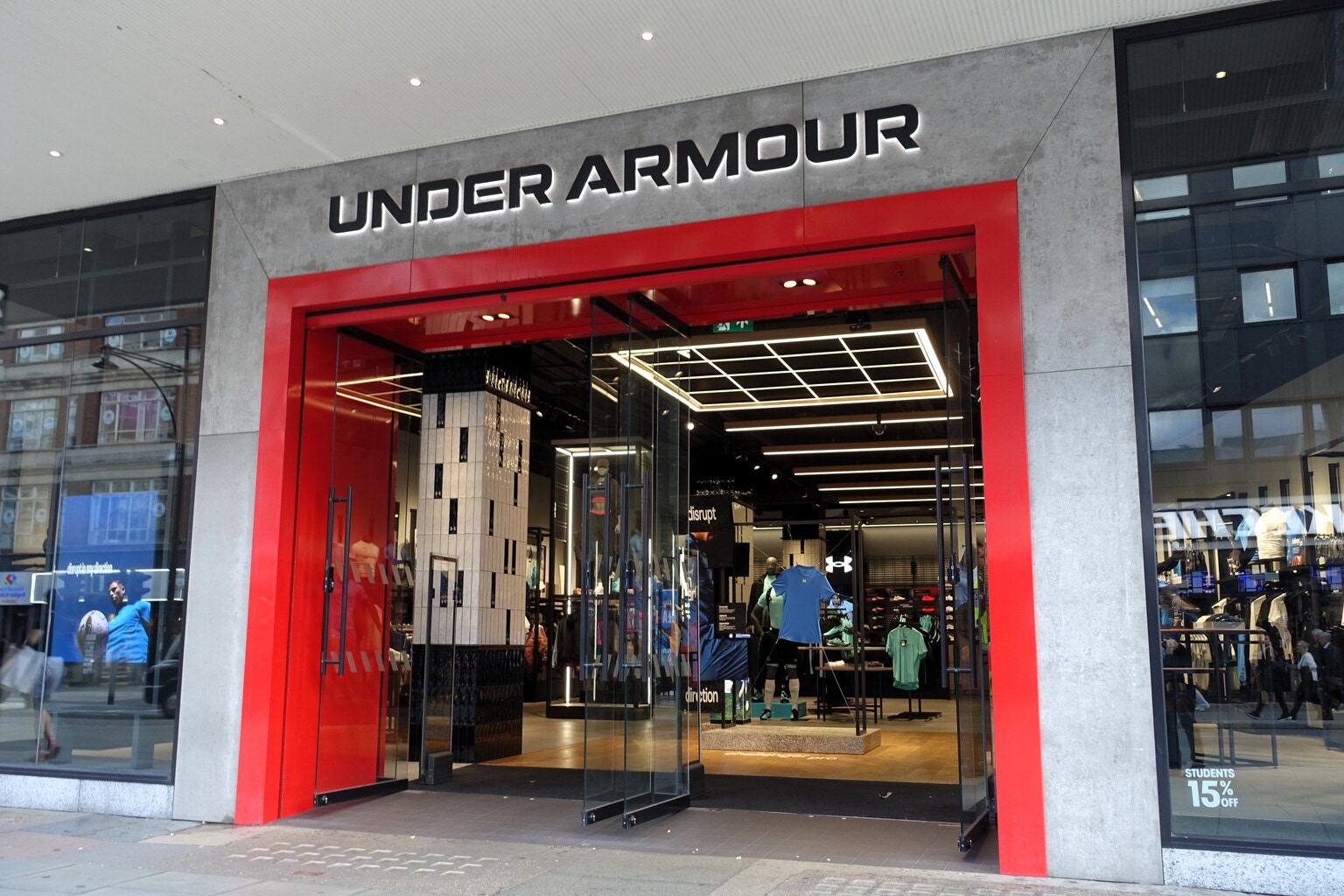
In addition, the company offers accessories, which include gloves, bags, headwear, and sports masks; and digital subscription and advertising services under the MapMyRun and MapMyRide platforms.It primarily offers its products under the UNDER ARMOUR, UA, HEATGEAR, COLDGEAR, HOVR, PROTECT THIS HOUSE, I WILL, UA Logo, ARMOUR FLEECE, and ARMOUR BRA brands.The company sells its products through wholesale channels, including national and regional sporting goods chains, independent and specialty retailers, department store chains, mono-branded Under Armour retail stores, institutional athletic departments, and leagues and teams, as well as independent distributors; and directly to consumers through a network of 422 brand and factory house stores, as well as through e-commerce websites.


It operates in the United States, Canada, Europe, the Middle East, Africa, the Asia-Pacific, and Latin America.Under Armour, Inc.was incorporated in 1996 and is headquartered in Baltimore, Maryland.

Show Full description

1.b. Last Insights on UA

Under Armour's recent performance was driven by its Q3 2026 earnings release, where the company posted an adjusted earnings surprise of $0.09 per share, beating expectations. Aggressive cost controls and restructuring efforts under CEO Kevin Plank helped offset declining demand in North America. The company raised its full-year outlook, citing benefits from its turnaround plan. Additionally, Fairfax Financial Holdings increased its stake, boosting investor confidence. Despite persistent fundamental weaknesses, including declining North America revenue and footwear sales, the company's cost-cutting measures have yielded positive results.

1.c. Company Highlights

2. Under Armour's Turnaround Efforts Show Promise

Under Armour's third-quarter 2026 financial performance met or exceeded outlook across major line items, reflecting discipline and consistency in execution. Revenue declined 5% to $1.3 billion, slightly better than the outlook. Gross margin declined 310 basis points to 44.4%, driven by supply chain headwinds and pricing pressures. The company recorded a $150 million operating loss, but adjusted operating income was $26 million. Actual EPS came out at $0.09, beating estimates of -$0.01548.

Publication Date: Feb -17

📋 Highlights
  • Inventory Reduction:: Year-over-year inventory declined 2%, reflecting operational simplification and tighter assortments.
  • Revenue Performance:: Revenue fell 5% to $1.3 billion, outperforming guidance despite 10% North America revenue decline.
  • Footwear Strategy:: Footwear turnaround advanced with 310-basis-point gross margin decline offset by higher full-price sell-through and SKU rationalization.
  • Regional Growth:: EMEA revenue rose 6%, driven by retail partnerships and consistent execution, while Latin America surged 20%.
  • Margin Targets:: Adjusted SG&A expenses down 7% to $665 million, with gross margin expected to decline 190 basis points in fiscal 2026.

Regional Performance

Regional performance varied, with North America beginning to turn the corner, EMEA delivering consistent results, and APAC making progress on its reset. EMEA region has shown strength with 9% growth, driven by a consistent team, strong leadership, and partnerships with retailers like JD Sports and Sports Direct. The company is focused on maintaining growth in this region, although it's becoming more promotional, particularly in the UK.

Product Segmentation and Strategy

Under Armour is concentrating on the "better" and "best" categories, aiming to drive growth and profitability. The company has used a vernacular of "good, better, best" to think about its product lines and is working to establish clear segmentation in categories like compression. By applying a "good, better, best" structure, Under Armour aims to drive growth and profitability.

Valuation and Future Outlook

Analysts estimate next year's revenue growth at 1.7%. The current P/S Ratio of 0.62 suggests that the market has a relatively modest expectation for the company's revenue growth. With a P/E Ratio of -5.88, the market is pricing in significant challenges, but the company's efforts to simplify operations and drive growth in key categories could lead to improved profitability. Under Armour is optimistic about reaching stabilization in fiscal 2027, with opportunities across channels.

Operational Efficiency

The company is focused on controlling costs, and its balance sheet remains strong, with $465 million in cash and cash equivalents and $600 million in restricted investments. Inventory was down 2% year over year to just over $1 billion. By reducing SKUs and focusing on key products, the company hopes to achieve a clearer brand image and improved bottom line.

3. NewsRoom

Card image cap

Berger Montague PC Investigates Under Armour, Inc's Board of Directors for Breach of Fiduciary Duty (UA)

Feb -19

Card image cap

Prem Watsa's Strategic Moves: Orla Mining Ltd Sees a -13.01% Impact

Feb -17

Card image cap

Under Armour: Get Out While You Can

Feb -12

Card image cap

Berger Montague PC Investigates Under Armour, Inc's Board of Directors for Breach of Fiduciary Duty (NYSE: UA)

Feb -10

Card image cap

Insiders Buy 3 High-Risk Stocks—Here's What's Driving the Moves

Feb -09

Card image cap

Under Armour: Sell The Spike

Feb -08

Card image cap

Under Armour, Inc. (UAA) Q3 2026 Earnings Call Transcript

Feb -06

Card image cap

Under Armour tops profit expectations, boosts forecast despite sales decline

Feb -06

4. Business Breakdown

4.a. Revenues by Country

4.b. Revenues by Segment

5. Expected revenues mid-term growth (2.35%)

6. Segments

Apparel

Expected Growth: 2%

Under Armour's 2% growth in Apparel is driven by increasing demand for athleisure wear, successful marketing campaigns, and strategic partnerships with popular athletes and teams. Additionally, the company's focus on innovation, such as its Curry and HOVR footwear lines, has helped to boost sales and expand its customer base.

Footwear

Expected Growth: 3%

Under Armour's footwear segment growth is driven by increasing popularity of Curry and HOVR footwear lines, expansion into new markets, and strategic partnerships with key retailers. Additionally, the company's focus on digital marketing and e-commerce platform enhancements have contributed to the 3% growth.

Accessories

Expected Growth: 4%

Under Armour's Accessories segment growth is driven by increasing demand for athleisure wear, strategic partnerships with popular fitness apps, and expansion into new markets. Additionally, the company's focus on innovative products, such as smart shoes and fitness trackers, has contributed to the segment's growth.

License Revenues

Expected Growth: 1%

Under Armour's license revenue growth is driven by increasing demand for branded apparel and footwear, expansion into new markets, and strategic partnerships with key retailers. Additionally, the company's focus on digital marketing and e-commerce platforms has enhanced brand visibility, contributing to revenue growth.

Corporate Other

Expected Growth: 0%

Under Armour's Corporate Other segment shows 0% growth, driven by stagnant licensing revenue, flat demand for digital fitness subscriptions, and minimal contribution from new business ventures, offsetting any potential gains from strategic partnerships or cost-saving initiatives.

7. Detailed Products

Footwear

Under Armour offers a wide range of footwear products, including running shoes, basketball shoes, football cleats, and sandals, designed for performance, comfort, and style.

Apparel

Under Armour provides a variety of apparel products, including tops, bottoms, dresses, and outerwear, designed for performance, comfort, and style.

Accessories

Under Armour offers a range of accessories, including hats, bags, socks, and gloves, designed to complement their apparel and footwear products.

Connected Fitness

Under Armour's Connected Fitness segment includes wearable devices, such as fitness trackers and smartwatches, that track fitness and health metrics.

Digital Fitness

Under Armour's Digital Fitness segment includes mobile apps, such as MyFitnessPal and MapMyFitness, that provide fitness tracking, nutrition planning, and workout planning.

8. Under Armour, Inc.'s Porter Forces

Forces Ranking

Threat Of Substitutes

Under Armour faces moderate threat from substitutes, as consumers have various alternatives for athletic apparel and footwear, such as Nike, Adidas, and Reebok. However, Under Armour's strong brand recognition and innovative products help mitigate this threat.

Bargaining Power Of Customers

Under Armour's customers have relatively low bargaining power due to the company's strong brand image and limited availability of substitutes. This allows Under Armour to maintain its pricing power and negotiate favorable terms with retailers.

Bargaining Power Of Suppliers

Under Armour's suppliers, such as textile manufacturers and logistics providers, have moderate bargaining power. While the company has some flexibility in choosing suppliers, it still relies on a few key partners, which can exert some pressure on prices and terms.

Threat Of New Entrants

The threat of new entrants in the athletic apparel and footwear industry is relatively low due to high barriers to entry, including significant capital requirements, established brand recognition, and complex supply chains. Under Armour's strong brand and distribution network also make it difficult for new entrants to gain traction.

Intensity Of Rivalry

The athletic apparel and footwear industry is highly competitive, with intense rivalry among established players like Nike, Adidas, and Under Armour. This competition drives innovation, marketing, and pricing strategies, making it challenging for companies to maintain market share and profitability.

9. SWOT Analysis

10. Capital Structure

10.a. Balance Sheet

10.b. Weighted Average Cost of capital

Value
Debt Weight 43.22%
Debt Cost 3.95%
Equity Weight 56.78%
Equity Cost 12.08%
WACC 8.57%
Leverage 76.12%

11. Quality Control: Under Armour, Inc. passed 3 out of 9 key points

12.a Historical Valuation

12.b Price/Earnings Ratio

12.c Margin Valuation

12.d Peers Valuation

Peers Group Analysis

Stock-Card
Ralph Lauren

A-Score: 5.6/10

Value: 2.4

Growth: 6.1

Quality: 6.8

Yield: 3.0

Momentum: 9.0

Volatility: 6.3

1-Year Total Return ->

Stock-Card
Kontoor Brands

A-Score: 4.6/10

Value: 3.8

Growth: 4.0

Quality: 5.7

Yield: 7.0

Momentum: 3.0

Volatility: 4.3

1-Year Total Return ->

Stock-Card
PVH

A-Score: 3.9/10

Value: 7.8

Growth: 4.4

Quality: 4.7

Yield: 0.0

Momentum: 2.5

Volatility: 4.0

1-Year Total Return ->

Stock-Card
VF

A-Score: 3.8/10

Value: 4.8

Growth: 1.7

Quality: 4.5

Yield: 6.0

Momentum: 3.0

Volatility: 2.7

1-Year Total Return ->

Stock-Card
Albany International

A-Score: 3.5/10

Value: 5.1

Growth: 4.8

Quality: 2.2

Yield: 3.0

Momentum: 1.0

Volatility: 5.0

1-Year Total Return ->

Stock-Card
Under Armour

A-Score: 3.2/10

Value: 7.5

Growth: 2.1

Quality: 4.2

Yield: 0.0

Momentum: 1.0

Volatility: 4.3

1-Year Total Return ->

Peers Metrics

12.e Scoring Insights

12.f DCF BETA

Parameters

Short Term Growth

Short term Time

Long-Term Growth

WACC

Target Price

6.76$

Current Price

6.76$

Potential

-0.00%

Expected Cash-Flows